O3DE multi-camera rendering performance analysis

Chasing 18 Milliseconds: A Performance Deep Dive into O3DE's Render Readback Pipeline

We spent a full session systematically profiling O3DE’s multi-camera streaming pipeline, testing eight different optimization approaches, and pinpointed the exact bottleneck: 18 ms of fixed overhead in the AttachmentReadback scope system. Here’s what we tried, what we measured, and what it means for the engine.
April 17, 2026 · 7 min · Pavel Guzenfeld
Three live Godot camera streams over RTP/UDP rendered by GStreamer clients

From Unity to Godot: Multi-Camera Streaming at 50 FPS with Async GPU Readback

After O3DE’s 18 ms frame-graph readback made 30 FPS streaming impossible, we tried Godot. It got us there — eventually. This is the full path from 105 FPS on nothing to 50 FPS per camera with three live RTP streams, including every wrong turn and every underdocumented Godot behavior we hit on the way.

April 17, 2026 · 12 min · Pavel Guzenfeld
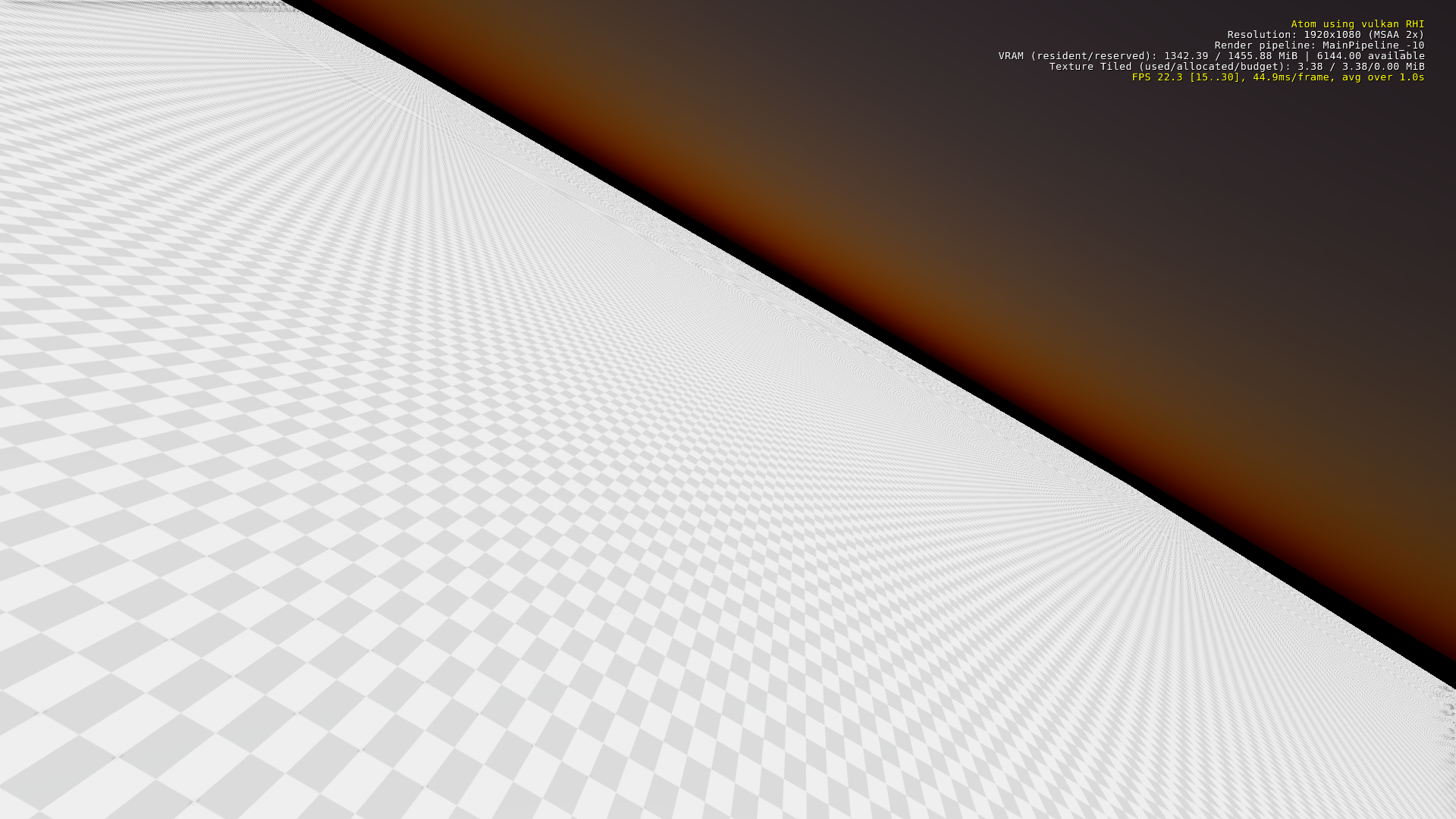
O3DE rendering a ground plane from a camera spawned programmatically inside a headless Docker container

From Unity to O3DE: Multi-Camera Streaming at 1080p in a Headless Docker Container

Exploring whether O3DE can replace Unity as the render engine for a drone simulation that streams multiple 1080p camera feeds via GStreamer. From first scaffold to three live RenderToTexture pipelines in a single session.

April 16, 2026 · 6 min · Pavel Guzenfeld
Procedural settlement with OSM buildings, roads, and entities in a headless Unity simulation

Procedural Settlement: Generating 3D Buildings, Roads, and Entities from OpenStreetMap in Unity

How I replaced a proprietary terrain bundle with a fully procedural environment generated from open-source data — hundreds of buildings with window textures from OpenStreetMap, terrain-hugging roads, satellite-driven vegetation, and multiple ground and air entities — all built at runtime in a headless Unity Docker simulation.

April 13, 2026 · 10 min · Pavel Guzenfeld
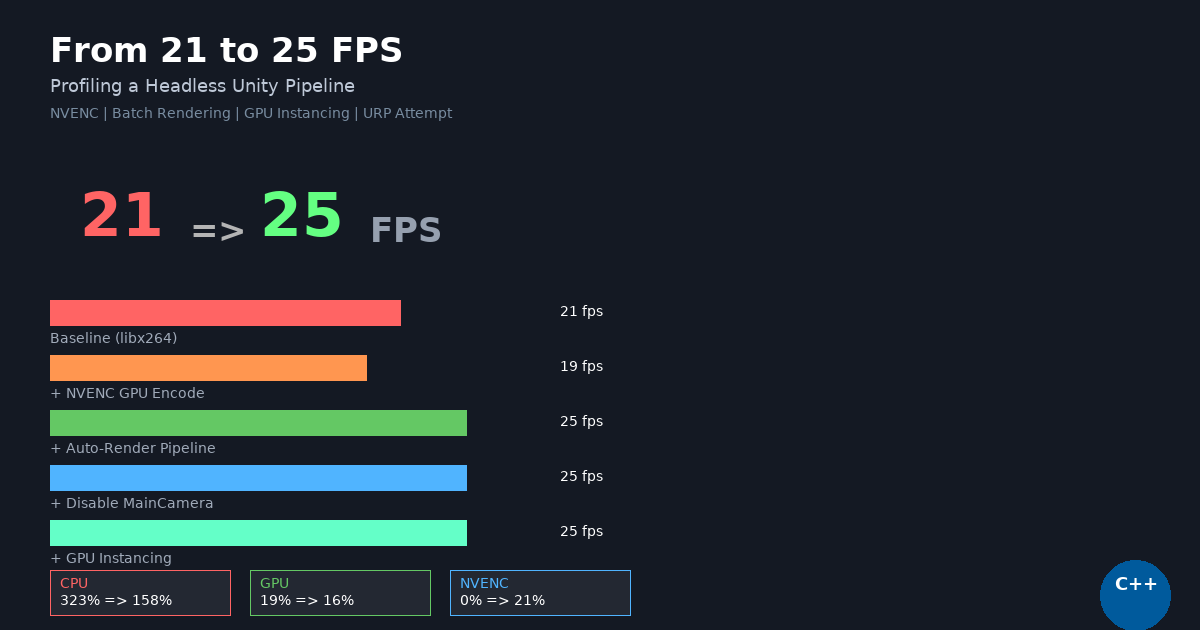
FPS optimization pipeline for headless Unity simulation

From 21 to 25 FPS: Profiling and Optimizing a Headless Unity Simulation Pipeline

A detailed technical walkthrough of profiling and optimizing a headless Unity simulation from 21 to 25 FPS — covering NVENC GPU encoding, batch camera rendering, GPU instancing, static batching, and the failed URP migration. Every measurement, every dead end, every lesson.

April 4, 2026 · 8 min · Pavel Guzenfeld
From Magenta to Desert: Fixing Unity Terrain in Docker

From Magenta to Desert: Fixing Cross-Platform Unity Terrain Rendering in Docker

A detailed account of fixing terrain rendering in a headless Unity 6 Docker simulation — from magenta buildings and gray streaming cameras to textured villages with working RTSP feeds. Covers cross-platform asset bundle shader mismatches, runtime material conversion, texture recovery from broken materials, and every dead end along the way.

March 27, 2026 · 12 min · Pavel Guzenfeld